Decor for Food Design: A Practical Evaluation of Versatile Vector Assets
In the competitive landscape of food marketing and content creation, visual distinctiveness is often the deciding factor between a casual scroll and an engaged interaction. Decor for Food Design addresses this need by providing a comprehensive suite of vector assets tailored specifically for culinary themes. This collection is not merely a set of images; it is a functional toolkit designed to streamline the workflow of professionals who require high-quality, scalable graphics without the overhead of creating every element from scratch.
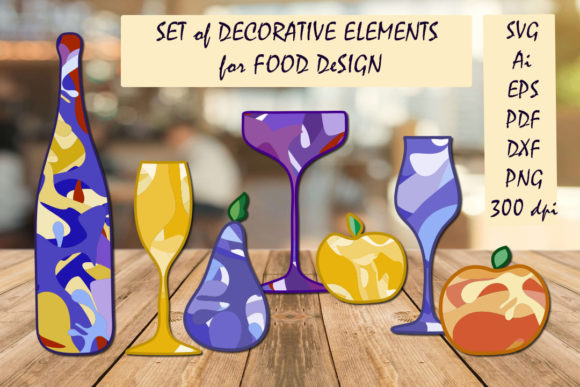
The core value proposition of this resource lies in its flexibility. Whether you are designing a seasonal menu for a boutique restaurant, creating promotional stickers for a local bakery, or producing digital greeting cards for holiday campaigns, the ability to manipulate individual elements is crucial. The product includes 7 distinct decorative elements available across multiple file formats, ensuring that the final output meets specific technical requirements for both print and digital media.
Technical Specifications and Format Utility
One of the primary strengths of Decor for Food Design is its robust file structure. The package is organized into three distinct folders containing EPS, SVG, and PNG files, alongside common files in AI, PDF, and DXF formats. This variety caters to different stages of the design process and different software environments.
- EPS and AI Files: These are the industry standards for professional graphic design. They allow designers to access the raw vector data, enabling non-destructive editing. You can isolate specific components, adjust anchor points, and modify color palettes to match brand guidelines perfectly.
- SVG Files: For web developers and digital marketers, Scalable Vector Graphics are essential. These files remain crisp at any resolution, making them ideal for responsive websites, mobile applications, and social media assets where image clarity on high-density displays is paramount.
- PNG Files: High-quality 300 DPI PNGs with transparent backgrounds provide immediate usability. When time is of the essence and complex vector editing is not feasible, these rasterized assets can be dropped directly into layouts, presentations, or e-commerce listings.
- DXF Files: The inclusion of DXF format is a significant differentiator. This format bridges the gap between digital design and physical production, allowing for compatibility with laser cutters, CNC machines, and plotter cutters used in signage manufacturing.
All vector elements within the set are fully editable and easily scalable. This means a small icon intended for a business card can be expanded to cover a storefront window without losing fidelity. The transparency of the PNG files ensures seamless integration into existing designs, eliminating the unsightly white boxes that often plague clipart usage.
Practical Applications Across Industries
The versatility of Decor for Food Design extends far beyond simple decoration. Its utility spans a wide array of practical applications that serve various professional needs.
Menu Engineering and Signage
For restaurant owners and hospitality managers, menus are more than lists of dishes; they are branding tools. Using these decorative elements, proprietors can create cohesive visual themes that align with their cuisine. A rustic farmhouse theme might utilize earthy tones and organic shapes, while a modern bistro might opt for sleek, geometric accents. Because the elements are vectors, text can be overlaid and adjusted to ensure legibility against busy backgrounds.
Marketing Materials and Merchandise
Entrepreneurs selling food products often require custom packaging and promotional items. The scalability of these assets makes them perfect for creating labels, mugs, and branded merchandise. A coffee shop owner could use the vector files to generate a unique logo sticker for takeaway cups or a seasonal design for a limited-edition mug. The ability to change colors and combine objects allows for rapid iteration during the prototyping phase.
Digital Content and Social Media
Bloggers and content creators constantly need fresh visuals to keep their audiences engaged. Decor for Food Design offers a solution for generating consistent branding across platforms. By combining the decorative elements with custom typography, creators can produce eye-catching headers for blog posts, featured images for Instagram, or story highlights that maintain a professional aesthetic.
Event Planning and Greetings
For event planners and hobbyists, the ability to create custom signs and greeting cards is invaluable. Whether organizing a corporate lunch, a wedding reception, or a community potluck, personalized signage adds a touch of professionalism. The included files support the creation of everything from table numbers to welcome boards, all while maintaining a unified visual language.
Evaluating Quality and Usability
When assessing design resources, quality control is paramount. The specification of 300 DPI for the raster files indicates a commitment to print-ready standards. In real-world testing, this level of resolution prevents pixelation when images are printed on larger formats like banners or posters. The vector nature of the EPS and SVG files further guarantees that line work remains sharp, regardless of how much the design is resized.
Usability is another critical factor. The organization of the zip file into logical folders suggests a user-centric approach. Designers can quickly locate the file type required for their current task without sifting through cluttered directories. The fact that common files like PDF and DXF are included separately ensures that even users working in CAD software or those needing quick-viewable documents have immediate access.
However, it is important to acknowledge that the effectiveness of any asset library depends on the user's proficiency with design software. While the files are "easily scalable and editable," this assumes a baseline familiarity with tools like Adobe Illustrator, CorelDRAW, or compatible alternatives. Novice users may find the vector features overwhelming, though the provided PNG files offer a lower barrier to entry for those using basic image editors.
Strategic Value for Professionals and Hobbyists
The decision to invest in a resource like Decor for Food Design should be weighed against the potential return on investment regarding time and cost. For freelancers and agencies, purchasing a pre-made set of high-quality assets can save hours of manual illustration time. This efficiency allows professionals to allocate more resources to strategy, client communication, and project management.
Small business owners often operate with limited budgets. Creating custom illustrations from scratch requires hiring expensive talent or dedicating significant internal time. This collection offers a cost-effective alternative that delivers a polished look comparable to commissioned work. The ability to recombine objects and alter colors means one purchase can yield dozens of unique variations, extending the lifespan and value of the initial investment.
For educators and publishers, consistency is key. Using a standardized set of decorative elements helps maintain a cohesive look across textbooks, workbooks, or educational materials. The clean lines and clear shapes of the vector elements ensure that diagrams and illustrations remain understandable even when reduced in size for thumbnails or previews.
Limitations and Considerations
No resource is without limitations. The primary constraint of Decor for Food Design is its specificity. It is tailored for food-related themes. If your project involves abstract concepts or unrelated industries, the relevance of the assets may diminish. Additionally, while the files are editable, the complexity of the vector paths varies. Some elements may be grouped tightly, requiring careful ungrouping before modification.
Furthermore, the reliance on proprietary formats like AI (Adobe Illustrator) means that users must have access to compatible software to unlock the full potential of the vector files. While free viewers exist, they often lack the advanced editing capabilities required for true customization. Users without such software will rely primarily on the PNG and SVG exports, which, while versatile, do not offer the same depth of manipulation as the source vector files.
Final Assessment
Decor for Food Design represents a solid addition to the toolkit of anyone involved in visual communication within the culinary sector. Its strength lies in the combination of high-resolution raster options and fully editable vector sources. The inclusion of DXF files for physical production adds a layer of utility that distinguishes it from standard clipart collections.
For professionals seeking to enhance their workflow, entrepreneurs looking to establish a strong brand identity, and creators needing reliable assets for diverse projects, this collection offers tangible value. The ability to combine objects, add text, and modify attributes empowers users to create unique designs that feel bespoke rather than generic. While it requires a degree of technical skill to maximize the vector capabilities, the resulting flexibility and consistency make it a worthwhile consideration for serious practitioners in the field.
Ultimately, the success of this resource depends on how well it integrates into your existing workflow. If you require adaptable, high-quality graphics that can transition seamlessly from digital screens to printed goods, Decor for Food Design provides a robust foundation for achieving those goals efficiently.