Happy Earth Day Greeting Card Set: A Comprehensive Evaluation for Designers and Creators
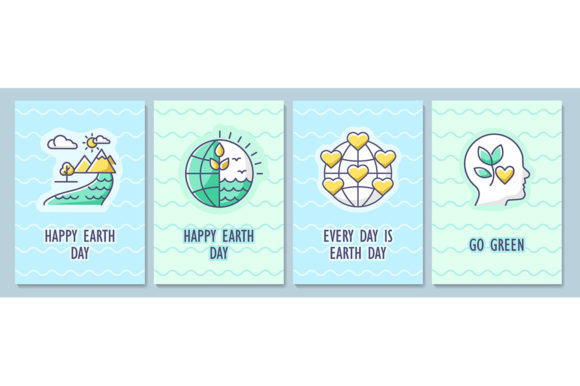
In the realm of digital design, few occasions carry as much weight and creative potential as Earth Day. For professionals tasked with creating materials to celebrate environmental awareness, the Happy Earth Day Greeting Card Set represents a significant resource. This collection is not merely a bundle of images; it is a curated ecosystem of vector assets designed to facilitate meaningful communication about protecting our planet. By integrating color icon elements with postcard vector designs and decorative flyer illustrations, this set addresses the diverse needs of modern content creators.
When evaluating design resources, the distinction between a simple graphic download and a comprehensive toolkit lies in versatility and scalability. The Happy Earth Day greeting card with color icon element set offers a modular approach that allows users to construct unique messages rather than relying on static templates. Whether you are designing a mobile app interface, an infographic for a brochure, or a physical postcard, the flexibility of these assets determines their long-term value. This analysis explores the specific attributes of this product, compares it against standard design approaches, and helps you determine if it aligns with your current project requirements.
Understanding the Core Components of the Set
The foundation of this collection rests on its dual nature: it functions both as a complete greeting card suite and as a library of individual iconographic elements. The primary offering includes a postcard vector design featuring creative illustrations. These are not rasterized images that lose quality upon resizing; they are built on scalable vector graphics principles. This ensures that whether the output is a small social media thumbnail or a large-format banner, the visual integrity remains pristine.
A critical differentiator in this set is the inclusion of a color icon element set. Many competitors provide only pre-composed cards, forcing the user to accept a fixed layout. In contrast, this set provides the building blocks. Users can extract specific icons representing recycling, trees, water conservation, or renewable energy and integrate them into new compositions. This modularity is essential for brands that need to maintain a consistent visual identity across multiple touchpoints while celebrating the same event.
The product file formats further enhance its utility. Available in EPS, SVG, PNG, JPEG, and AI, the set caters to a wide spectrum of software environments. The availability of EPS and AI files is particularly notable for print designers who require editable layers and precise control over color separations. Meanwhile, the SVG format is indispensable for web developers needing lightweight, resolution-independent graphics. The inclusion of PNG and JPEG ensures immediate usability for quick social media posts or presentations where editing capabilities are secondary to speed.
Comparative Analysis: Versatility vs. Simplicity
When comparing the Happy Earth Day Greeting Card Set to other market options, the tradeoff often lies between ease of use and customization depth. Standard greeting card packs often offer high aesthetic appeal but low adaptability. They are "one-and-done" solutions where the user must select a pre-made design that fits their needs exactly. If the font size is wrong or the color palette does not match a corporate brand guideline, the asset becomes unusable without significant effort.
In comparison, the element-based structure of this set shifts the burden from selection to creation. It requires a higher level of technical proficiency or willingness to learn, but the reward is a fully customized result. For example, a marketing team launching a campaign for a mobile app might find that a standard postcard design is too large or lacks the necessary space for an app download button. With the notecard with congratulatory message pack included in this set, designers can isolate the typography and the background illustration separately. They can then overlay custom call-to-action buttons or adjust the layout to fit a vertical mobile screen aspect ratio.
This approach also extends to the creation of infographics. Because the set includes distinct icon elements, it serves as a robust starting point for educational materials. Instead of sourcing icons from one provider and illustrations from another, designers can source everything from this single repository. This consistency in style—ensuring that the line weight of a leaf icon matches the stroke width of a globe illustration—is a common pain point when mixing assets from different sources. The Happy Earth Day greeting card with color icon element set solves this by maintaining a unified design language throughout.
Strengths and Limitations of the Vector Approach
The decision to utilize vector-based assets like those found in this set involves understanding specific strengths and limitations. The primary strength is infinite scalability. A poster printed for a community center and a logo used in a newsletter footer can share the exact same source file without any degradation in quality. This is a logistical advantage that raster-only alternatives cannot match.
Furthermore, the color icon elements allow for rapid iteration. In a fast-paced environment where a client might request a change from green to blue, or from a flat design to a gradient, vector files make these adjustments instantaneous. There is no need to redraw the entire image or hunt for a new stock photo. This efficiency translates directly to cost savings and faster turnaround times for agencies and freelancers.
However, there are tradeoffs. The initial setup time may be longer compared to dragging and dropping a finished template. Users must have a working knowledge of vector editing software such as Adobe Illustrator or compatible alternatives. Additionally, while the set is extensive, it may not cover every conceivable niche within environmental themes. If a project requires highly specific scientific data visualization or hyper-realistic photography, this illustrative set will not suffice. It is best suited for conceptual, promotional, and celebratory contexts rather than documentary or highly technical applications.
Ideal Use Cases and Strategic Applications
Determining when to choose the Happy Earth Day Greeting Card Set depends heavily on the scope of the project. This resource is ideally suited for organizations looking to launch multi-channel campaigns. Consider a scenario where a non-profit organization wants to engage supporters through email newsletters, Instagram stories, and printed flyers. Using this set, the core visual theme can remain consistent while adapting to each platform's constraints.
For businesses creating internal communications, the decorative flyer with creative illustration aspect is valuable. Companies can use these assets to announce sustainability initiatives, celebrate employee achievements in green projects, or invite staff to Earth Day events. The ability to customize the congratulatory message means the tone can shift from formal corporate announcements to casual team celebrations.
The set is also a strong candidate for educational institutions. Teachers and curriculum developers often struggle to find age-appropriate, visually engaging materials for environmental education. The colorful icon elements can be repurposed into worksheets, classroom posters, or digital slides. The vector nature ensures that these materials look professional even when projected on large screens or printed in black and white for budget-conscious schools.
Conversely, there are situations where this set might not be the optimal choice. If a designer is working on a project that requires a very specific, photorealistic depiction of a local landscape or a specific endangered species, generic vector illustrations may feel too stylized. Similarly, if the workflow relies entirely on drag-and-drop website builders that do not support custom vector manipulation, the full potential of the EPS and AI files may go untapped. In such cases, a simpler, ready-to-use PNG pack might be more efficient.
Making an Informed Decision on Resources
Selecting the right design asset is a strategic decision that impacts the quality and reach of your final output. The Happy Earth Day Greeting Card Set stands out for its balance of artistic quality and functional flexibility. It acknowledges that modern design rarely happens in a vacuum; assets must be adaptable enough to survive the rigors of cross-platform distribution.
By offering a mix of complete layouts and raw components, this set empowers users to move beyond passive consumption of graphics and into active creation. It supports the broader goal of environmental advocacy by making it easier for creators to produce high-quality, professional-looking materials without prohibitive costs or technical barriers. Whether you are a seasoned graphic designer or a small business owner managing your own marketing, the variety of file formats and the modular nature of the icon elements provide a robust foundation for your Earth Day initiatives.
Ultimately, the choice comes down to your specific workflow and the level of customization required. If you value speed above all else and have strict brand constraints that preclude modification, a pre-made template might be sufficient. However, if you seek longevity, adaptability, and the ability to scale your message across various mediums, the Happy Earth Day Greeting Card Set offers a compelling solution. It transforms a single holiday celebration into a versatile design system that can be reused and refined year after year.
For those looking to expand their creative toolkit beyond this specific occasion, platforms like BSD Studio continue to evolve. By subscribing to updates, professionals gain access to new topics and discounts every week, ensuring their resource library remains current and relevant. From mobile app screen pages to complex brochure infographic templates, the demand for high-quality, adaptable design elements continues to grow. Choosing resources that prioritize flexibility and quality is the first step toward creating impactful work that resonates with audiences worldwide.