The Art of the Christmas Tree Flat Lay: Designing the Perfect Greeting Card
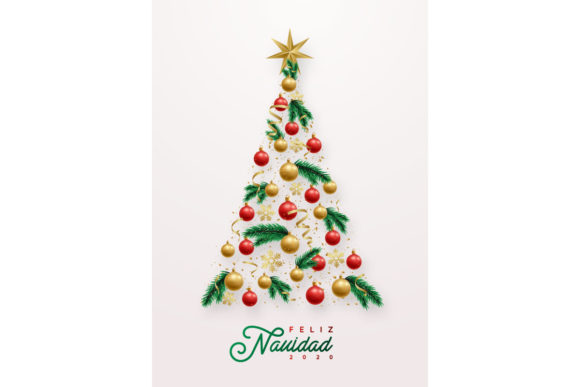
In the bustling world of digital and print media, few visual compositions evoke as much warmth and nostalgia as a greeting card with Christmas tree flat lay composition on white background. This specific aesthetic has transcended its traditional role in holiday correspondence to become a staple in modern marketing, social media content, and creative design. By combining realistic shiny Christmas decorative baubles, stars, bow, snowflakes, and pine branches against a pristine canvas, designers create an image that is both visually striking and emotionally resonant.
But what makes this particular arrangement so powerful? Why do brands and individuals alike gravitate toward the flat lay style for their holiday messaging? To understand the significance of the "Feliz Navidad" or "Merry Christmas" greeting card, we must look beyond the surface level of decoration and explore the psychology of color, the principles of composition, and the practical applications of this timeless art form in today's fast-paced digital landscape.
Understanding the Flat Lay Aesthetic
A flat lay is a photography technique where objects are arranged on a flat surface and photographed from directly above. While this style has been popularized by fashion bloggers and lifestyle influencers, its roots lie in graphic design and organization. When applied to the theme of a Christmas tree flat lay composition on white background, the goal shifts from mere documentation to storytelling.
The choice of a white background is not accidental. In design theory, white space (or negative space) serves several critical functions:
- Focus: It eliminates distractions, forcing the viewer's eye immediately to the colorful elements.
- Cleanliness: It conveys a sense of purity and freshness, which aligns perfectly with the winter season.
- Versatility: A clean white backdrop allows the image to be easily integrated into various layouts, from email headers to product packaging.
Unlike a three-dimensional photograph of a decorated room, a flat lay deconstructs the holiday experience. It breaks down the concept of "Christmas" into its essential components: the greenery, the lights, the ornaments, and the sentiment.
The Psychology of Color and Texture
When designing a greeting card with Christmas tree elements, the interplay between texture and color is paramount. The description often includes realistic shiny Christmas decorative baubles. These elements are crucial because they introduce light reflection and depth to a two-dimensional medium.
The "shiny" quality of the baubles mimics the way real glass ornaments catch candlelight or electric bulbs. In a flat lay, this creates a dynamic contrast against the matte finish of the pine branches and the paper texture of the card itself. This tactile variety engages the viewer's senses, creating a feeling of richness and luxury without needing complex 3D rendering.
Furthermore, the inclusion of stars and snowflakes adds geometric interest. Stars represent guidance and hope, while snowflakes symbolize the uniqueness of each moment. Together with a bow, which traditionally signifies a gift or celebration, these elements form a cohesive narrative of joy and giving.
The Significance of Bilingual Messaging
One of the most distinct features of modern holiday greetings is the inclusion of bilingual text, such as "Feliz navidad - Merry Christmas". This is more than just a stylistic choice; it reflects the demographic reality of many communities and the universal nature of the holiday spirit.
Using both English and Spanish demonstrates inclusivity. It acknowledges that Christmas is celebrated globally, regardless of language barriers. For businesses, this simple addition can significantly broaden their reach, making customers feel seen and valued. For individuals, it fosters a sense of connection with friends and family who may speak different languages.
Common Misunderstanding: Some might assume that adding a second language dilutes the message or makes the design cluttered. However, when executed correctly—using elegant typography and balanced spacing—the bilingual approach enhances the visual hierarchy rather than detracting from it. It turns a standard greeting into a bridge between cultures.
Practical Applications in Modern Life and Business
The utility of a high-quality Christmas tree flat lay composition extends far beyond the physical postcard. In our increasingly digital world, these images serve as versatile assets for various sectors.
Digital Marketing and E-Commerce
For online retailers, the holiday season is the peak of sales. A well-designed banner featuring pine branches and decorative baubles can increase click-through rates. Because the background is white, these images can be seamlessly overlaid on websites, newsletters, and social media posts without clashing with existing brand colors.
- Email Campaigns: A header image with a Merry Christmas greeting sets the tone for promotional offers.
- Social Media: Platforms like Instagram and Pinterest thrive on flat lays. They are highly shareable and encourage user-generated content.
- Packaging: Digital files can be used to create custom wrapping paper or shipping labels, adding a personal touch to every delivery.
Education and Creativity
In educational settings, creating a flat lay of a Christmas tree can be a fantastic project for students learning about design, photography, or cultural studies. It teaches them about composition, color theory, and the importance of lighting. Students can experiment with arranging realistic shiny baubles and snowflakes to understand how balance and symmetry work in visual arts.
Personal Expression and Technology
With the rise of video editing software and AI tools, creating these compositions has never been easier. Individuals can now mix and match elements to create personalized digital cards. Whether it is a video invitation for a virtual party or a static image for a WhatsApp status, the ability to customize a greeting card with Christmas tree elements allows for genuine personal expression.
Design Principles for a Stunning Composition
If you are looking to create or utilize a greeting card with Christmas tree flat lay composition on white background, understanding a few key design principles will elevate the result.
Balance and Symmetry
A classic Christmas tree shape implies a pyramid structure. However, a flat lay offers the freedom to play with asymmetry. You might arrange the pine branches in a loose circle, scattering the baubles around the perimeter. The key is to ensure the weight of the visual elements feels distributed evenly so the eye doesn't get stuck on one side.
The Role of Lighting
Even though it is a flat lay, lighting is everything. To achieve the look of realistic shiny Christmas decorative baubles, the light source must be soft yet directional. Harsh shadows can ruin the clean aesthetic, while soft light creates gentle gradients that highlight the curvature of the ornaments. The snowflakes should appear delicate, almost glowing, rather than stark white shapes.
Typography Integration
The text "Feliz navidad - Merry Christmas" must complement the imagery. A script font might evoke tradition and elegance, while a bold sans-serif could suggest modernity and minimalism. The text should never obscure the focal points of the composition, such as the central star or the richest cluster of decorations.
Bridging Tradition and Innovation
As we move further into the digital age, the desire for tangible, heartfelt connections remains strong. A greeting card with Christmas tree represents a perfect marriage of old-world charm and new-world technology. It takes the traditional symbols of the holiday—the tree, the star, the bow—and presents them in a format that fits seamlessly into our daily lives.
Whether you are a designer crafting a campaign for a global audience, a teacher planning a holiday lesson, or simply someone wanting to send a warm wish to a loved one, the flat lay composition offers a powerful tool. It simplifies the complexity of the season into a single, beautiful image that says, "I am thinking of you."
By embracing the white background and the vibrant details of baubles, stars, and pine branches, we create a visual language that is universally understood. It reminds us that despite our differences in language or location, the spirit of Christmas—represented by the joy of giving and the warmth of community—is shared by all.
So, the next time you see a beautifully arranged flat lay of a Christmas tree, take a moment to appreciate the thought behind it. It is more than just a picture; it is a carefully constructed invitation to celebrate, connect, and share the magic of the season.