Evaluating Golden Calligraphic Border Elements for High-End Design Projects
In the realm of digital and print design, few visual assets command attention quite like Golden Calligraphic Border Elements. These intricate assets blend the fluidity of calligraphy with the opulence of gold textures, creating a visual language that speaks to luxury, tradition, and sophistication. For designers aged 20 to 50 who are constantly seeking resources to elevate their projects, understanding the specific utility of these elements is crucial. Unlike standard geometric borders or simple floral frames, golden calligraphic designs offer a unique intersection of structure and organic flow, making them particularly effective for branding, event planning, and editorial layouts.
When evaluating a resource pack containing AI, EPS, JPG, and PNG files, it is important to look beyond the aesthetic appeal and consider the technical versatility. The inclusion of vector formats (AI and EPS) alongside raster options (JPG and PNG) ensures that these golden border elements can be adapted for everything from massive outdoor signage to high-resolution wedding invitations. This article explores the distinct characteristics of this design category, compares it with alternative decorative styles, and outlines the specific scenarios where these assets provide the most value.
Distinguishing Features of the Golden Calligraphic Style
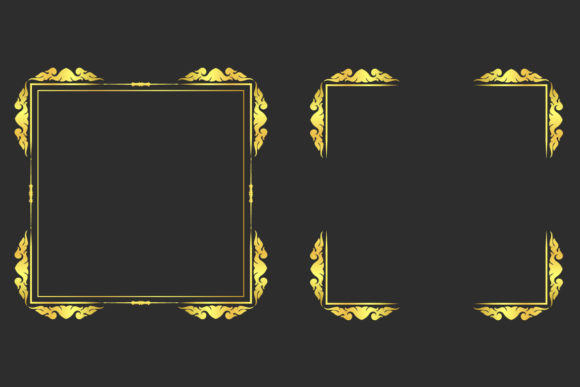
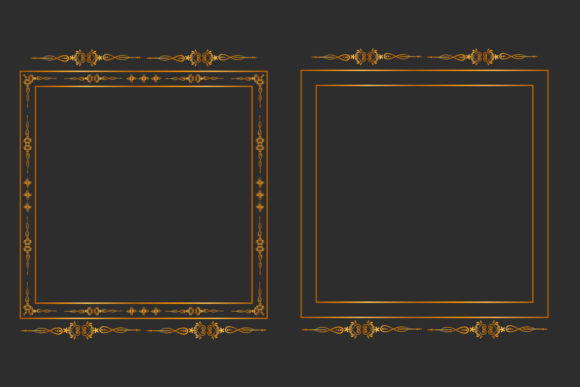
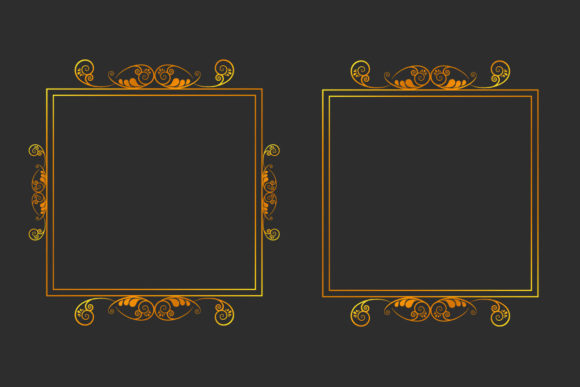
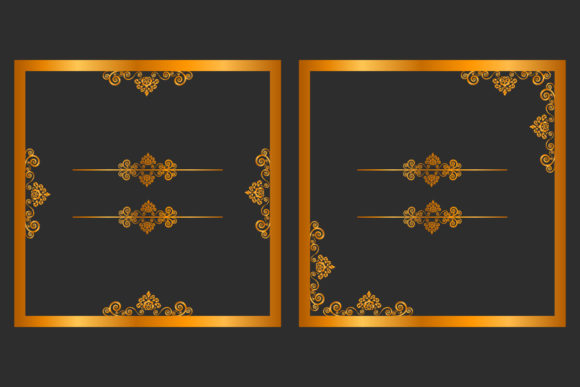
The primary distinction of Golden Calligraphic Border Elements lies in their fusion of two distinct artistic traditions: the ornate detailing found in traditional Thai patterns and mandalas, and the fluid, handwritten nature of calligraphy. While many border collections focus solely on geometric precision or purely illustrative florals, the calligraphic approach introduces a sense of movement and human touch. The lines are not merely straight; they curve, taper, and intersect in ways that mimic the stroke of a pen, often embellished with gold gradients that simulate metallic foil stamping.
This style is heavily influenced by cultural motifs, specifically the intricate Thai border and Thai pattern aesthetics. These designs often feature repeating motifs of leaves, vines, and stylized flowers that create a seamless frame. When combined with a gold color palette, the result is an elegant and luxury feel that immediately elevates the perceived value of any document. Whether used as a wedding frame, a decorative corner accent, or a full-page background, the visual weight of the gold texture draws the eye without overwhelming the content.
Furthermore, the mandala influence adds a layer of complexity. A standard border might run along one edge, but these elements often incorporate radial symmetry, allowing designers to create focal points in the center of a page or use the pattern frame to box in text elegantly. The ornate decoration provided by these vectors is not just about filling space; it is about guiding the viewer's gaze through a structured yet organic path.
Comparing Vector Versus Raster Options
A critical factor in choosing design assets is the file format. The availability of AI and EPS files alongside JPG and PNG in a single package offers significant advantages over purchasing separate assets. Understanding the tradeoffs between these formats helps designers make informed decisions based on their specific project requirements.
- Vector Formats (AI, EPS): These are the industry standards for professional graphic design. Because golden vector files are mathematically defined rather than pixel-based, they can be scaled infinitely. A designer can take a small border element intended for a business card and scale it up to cover a billboard without losing sharpness or introducing jagged edges. This is essential for projects requiring gold line work where the thickness of the stroke must remain precise regardless of size. Additionally, vector files allow for color manipulation; if a client requests a silver or rose-gold variation instead of yellow gold, the hue can be adjusted instantly within the software.
- Raster Formats (JPG, PNG): These files are pixel-based and rely on resolution (DPI). They are ideal for quick assembly in layout software like Canva, Adobe InDesign, or web editors where complex editing is not required. The PNG version is particularly useful because it typically supports transparency, allowing the illustration golden border to sit cleanly over any background color or image. However, scaling these up beyond their original dimensions will result in pixelation. They are best suited for social media graphics, email headers, or web banners where file size is a consideration.
For professionals working in print production, the vector versions are non-negotiable. The ability to edit the frame vector ensures that the final output meets the strict quality standards of commercial printing. Conversely, for digital marketers needing rapid turnaround times for social campaigns, the PNG and JPG versions provide immediate usability without the need for extensive post-processing.
Contextual Applications and Use Cases
The versatility of Golden Calligraphic Border Elements makes them suitable for a wide array of applications, though they are most effective in contexts that demand a sense of prestige or heritage. Identifying the right context is key to utilizing these assets effectively.
Wedding and Event Stationery
Perhaps the most common application is in the wedding industry. A wedding frame featuring thai pattern details and gold accents conveys a timeless elegance that fits both traditional and modern ceremonies. Designers use these corner pieces to frame names on invitations, while larger border elements create the structural foundation for menus and place cards. The floral aspects of the design soften the rigidity of the layout, adding a romantic touch that resonates with couples looking for a bespoke feel.
Branding and Packaging
For luxury brands, particularly in cosmetics, jewelry, or high-end fashion, packaging design is paramount. Using a golden frame or decorative dividers on product boxes can significantly enhance shelf presence. The lines and patterns in these vectors can be used to create subtle backgrounds that do not compete with the product photography but add a layer of texture and depth. The thai vector aesthetic, with its intricate details, works exceptionally well for brands wanting to evoke an exotic or artisanal quality.
Interior Design and Digital Interiors
While less obvious, these elements are increasingly used in interior design visualization. Architects and interior designers utilize background art fonts and decorative borders to create presentation boards that reflect the mood of a proposed space. A room designed in a classical or bohemian style might benefit from the organic curves of a calligraphic design element to complement the architecture.
Strategic Considerations and Limitations
While the aesthetic appeal of Golden Calligraphic Border Elements is undeniable, there are limitations and strategic considerations that designers must weigh before integrating them into a project.
Visual Weight and Clutter: The defining characteristic of these elements—their ornateness—can also be their downfall. If used excessively or with poor spacing, the gold details can become visually noisy, distracting from the core message. In minimalistic design trends, which favor clean lines and ample white space, a heavy mandala or pattern border might clash with the overall philosophy. In such cases, using only a single corner element or a simplified version of the line work is a better strategy than framing the entire page.
Color Compatibility: The "gold" in these assets is often rendered as a gradient or a specific hex code. While the vector format allows for recoloring, the underlying texture of the gold may not translate well to all color palettes. For instance, a bright yellow-gold might look jarring against a cool blue or stark black background unless carefully balanced. Designers should test the illustration against their chosen background to ensure harmony.
Cultural Sensitivity: Given the strong influence of Thai patterns and mandala structures, it is important to use these elements respectfully. These designs often carry cultural significance. While they are excellent for general luxury themes, using them in contexts that might trivialize the culture or misrepresent the origin can lead to reputational risks. Ensuring the usage aligns with the brand's values and the project's tone is a necessary step.
Making the Final Decision
Choosing between Golden Calligraphic Border Elements and other design resources ultimately comes down to the specific goals of the project. If the objective is to convey luxury, elegance, and a sense of established tradition, these elements are often superior to generic clipart or modern geometric shapes. The combination of floral motifs, calligraphic strokes, and gold finishes creates a rich visual tapestry that is difficult to replicate with simpler tools.
However, if the project requires a modern, tech-focused, or ultra-minimalist aesthetic, these ornate borders may feel out of place. In those scenarios, a cleaner border vector or a solid color divider would be more appropriate. Similarly, for high-volume, low-budget projects where speed is the priority, the JPG and PNG versions offer convenience, but the lack of editability might limit creative flexibility.
Ultimately, the value of this asset pack lies in its diversity. Having access to AI, EPS, JPG, and PNG formats means that a single purchase can serve multiple stages of a workflow—from initial concept sketching with editable vectors to final delivery with optimized rasters. By understanding the strengths of the golden calligraphic design elements and recognizing their limitations, designers can make informed choices that enhance their work without compromising on quality or relevance.