Minimal Tile Seamless Pattern: A Comprehensive Guide to Versatile Design Assets
In the realm of digital and print design, few resources offer as much utility and aesthetic flexibility as a minimal tile seamless pattern. These assets are more than just decorative elements; they are foundational building blocks that bridge the gap between complex cultural motifs and modern, clean aesthetics. Whether you are a graphic designer working on a brand identity, an interior architect selecting wallpaper for a commercial space, or a fashion student exploring textile concepts, understanding the nuances of this specific pattern type is crucial.
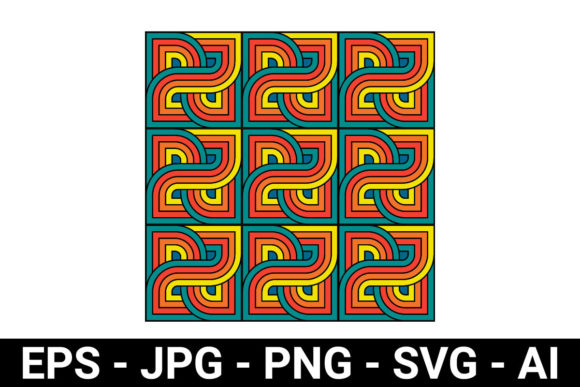
The core appeal lies in its duality. It combines the rich heritage of arabesque and islamic geometric traditions with the stark simplicity of monochrome and linear design principles. This fusion creates a visual language that feels both ornate and understated, making it suitable for high-end fashion applications as well as subtle corporate backdrop designs. The availability of these patterns in comprehensive ZIP folders containing AI, EPS, SVG, JPG, and PNG formats ensures that the asset can be adapted to any workflow, from vector-based logo creation to raster-based photo editing.
Distinguishing Features of Minimal Geometric Tile Patterns
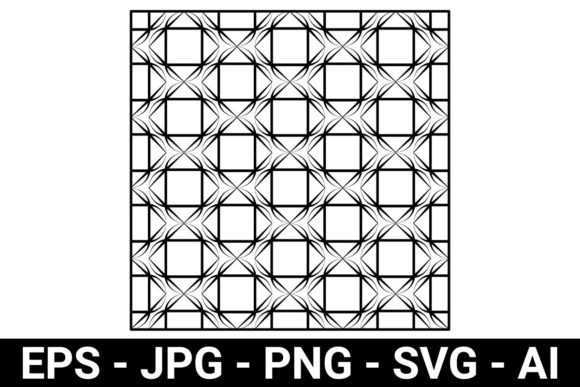
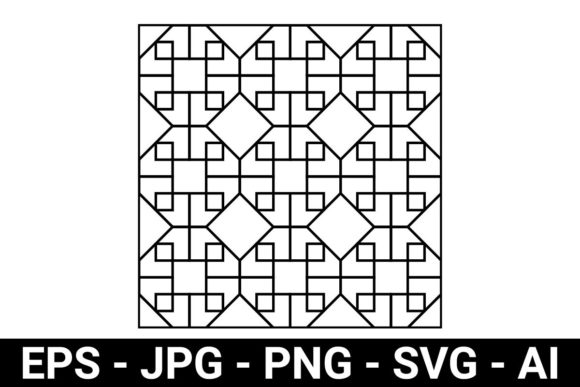
To understand why a minimal tile seamless pattern stands out among other decorative options, one must look at its structural integrity and stylistic restraint. Unlike traditional ornamental designs that often rely on heavy color palettes and intricate shading, minimal variations focus on the purity of shape and line. The design typically utilizes a grid-based system where squares, diamonds, or hexagons repeat in a continuous, tileable fashion.
This approach offers several distinct advantages:
- Scalability: Because the underlying structure is often vector-based (available in AI, EPS, and SVG), the pattern can be scaled from a tiny icon to a massive mural without losing resolution or clarity.
- Visual Restraint: The use of black lines against white or light backgrounds creates a modern style that does not compete with foreground content. This makes it ideal for graphic overlays where text legibility is paramount.
- Cultural Resonance: By incorporating oriental, morocco, and ethnic influences into a simplified form, the pattern retains a sense of history and depth without appearing dated or overly busy.
The term "seamless" is critical here. A true seamless pattern repeats perfectly horizontally and vertically, allowing designers to create infinite surfaces. This is essential for wallpaper applications, fabric printing, and web page backgrounds where tiling artifacts would otherwise ruin the visual experience.
Evaluating Format Options and Technical Flexibility
When sourcing a minimal tile seamless pattern, the file format available within the ZIP folder dictates how the asset can be utilized. Each format serves a specific purpose in the creative process, and having access to all of them provides a significant competitive edge over using single-format alternatives.
The vector formats (AI, EPS, SVG) are the gold standard for scalability. If your project involves print media like business cards, brochures, or large-scale banners, vector files ensure crisp edges regardless of size. They allow for easy manipulation of individual shapes, enabling you to alter the grid density or modify the ornament details before finalizing the design. For instance, a designer might take a complex arabic motif and simplify the line weight using these tools to better suit a minimalist brand identity.
Conversely, raster formats (JPG, PNG) are indispensable for web design and photo compositing. While they do not scale infinitely without pixelation, they are universally compatible with software like Photoshop or Canva. High-resolution PNGs with transparent backgrounds are particularly useful when layering the pattern over photographs or creating textured effects for decor projects. The inclusion of both types in a single package eliminates the need to purchase separate assets or convert files manually, saving time and ensuring consistency across different media channels.
Comparative Analysis: Minimalism vs. Traditional Ornamentation
A common decision point for designers is choosing between a minimal tile seamless pattern and more traditional, heavily detailed ornate styles. Both have their place, but they serve different strategic functions.
Traditional oriental or arabian patterns often feature vibrant colors, floral elements, and dense fills. These are excellent for creating a strong focal point or evoking a specific historical atmosphere. However, they can become visually overwhelming if used as a background for text-heavy layouts or if the client prefers a contemporary look. In contrast, the minimal version strips away the non-essential elements, leaving only the essential geometry.
This comparison highlights a key tradeoff: detail versus versatility. A highly detailed pattern has a stronger immediate impact but less flexibility. A simple, abstract pattern acts as a neutral canvas that supports other design elements rather than dominating them. For example, in fashion design, a bold floral print might be the main attraction of a dress, whereas a minimal geometric tile pattern is often used for linings, accessories, or as a subtle texture on a solid-colored garment to add depth without distraction.
Furthermore, minimal patterns align better with current trends in user interface (UI) and user experience (UX) design. Modern websites and apps require backgrounds that guide the eye without causing cognitive overload. The line-based nature of these patterns provides structure and rhythm without the noise associated with complex illustrations.
Strategic Applications Across Industries
The versatility of a minimal tile seamless pattern allows it to transcend specific industries. Its application depends largely on how the shape and style are interpreted by the end-user.
In the interior design sector, these patterns are increasingly popular for creating accent walls or custom wallpapers. The continuous nature of the design ensures that when printed, the transition between tiles is invisible, creating a cohesive environment. The monochrome aspect allows homeowners to match the pattern with various furniture colors, making it a safer choice than a multi-colored option that might clash with existing decor.
For packaging and branding, the geometric precision of these patterns conveys a sense of order, reliability, and sophistication. A tech company or a luxury skincare brand might choose a black-and-white tile pattern to communicate modernity and cleanliness. The ability to customize the pattern's scale means it can wrap around product boxes seamlessly, turning the packaging itself into a branded statement piece.
In the world of textile and fabric design, the pattern's adaptability is equally valuable. A simple grid of squares or an arabesque twist can be repeated endlessly to cover meters of cloth. When printed on cotton, silk, or synthetic blends, the linear design adds a touch of elegance to clothing items ranging from scarves to evening gowns.
Making the Right Choice: Decision Factors
Selecting the right pattern resource requires careful consideration of the project's goals, medium, and audience. Before committing to a minimal tile seamless pattern, evaluate the following factors:
- Intended Medium: Will the pattern be used primarily for screen display or physical printing? If printing large formats, prioritize vector files (SVG, EPS) to ensure quality.
- Visual Hierarchy: Does the background need to recede, or should it be a focal point? If the latter, a more colorful or complex pattern might be necessary. If the former, the minimal approach is superior.
- Brand Identity: Does the client value tradition or modernity? While these patterns blend both, a strictly minimal interpretation leans towards contemporary branding, whereas a more detailed ornamental version leans towards heritage.
- Technical Constraints: Are there limitations on file size or compatibility? Raster formats (JPG, PNG) are easier to share via email or embed in basic web editors, while vector files require professional software.
There are situations where a minimal tile seamless pattern may not be the optimal choice. If the project requires a whimsical, hand-drawn feel, or if the goal is to evoke a specific era like the Victorian age, a minimal geometric style might feel too sterile. Similarly, for children's products where bright colors and playful characters are expected, a monochrome linear design could appear too serious.
Conclusion: The Value of Thoughtful Selection
Ultimately, the decision to use a minimal tile seamless pattern comes down to the balance between aesthetic appeal and functional utility. These assets represent a sophisticated intersection of culture, mathematics, and art. By offering a range of formats from editable vectors to ready-to-use rasters, they empower creators to adapt a single concept to diverse needs.
Whether you are looking to create a decor item, design a fabric collection, or develop a web background, the minimal approach offers a timeless solution. It respects the viewer's attention span while providing the structural beauty of islamic and oriental traditions. As you explore your options, remember that the best design is often the one that enhances the message without shouting for attention. A well-chosen seamless pattern does exactly that—it provides the perfect backdrop for your creativity to shine.